
Written with curiosity by the Trend Pe Charcha desk.
Introduction
The MacBook line has enjoyed a steady cadence of upgrades ever since Apple transitioned to its own silicon. With the M4 variants fresh in the market, attention is already turning toward the next generation — often referred to simply as MacBook M5 (or “MacBook Pro / Air with M5” depending on the model). Over the past months, leaks, insider reports, and analyst predictions have painted a partial picture of what the M5 generation might bring — and when it might arrive.
In this article, we’ll gather all those whispers, separate the likely from the wishful, and help you decide whether waiting for the M5 makes sense — or if buying today is safer.
Timeline & Launch Windows — What the Leaks Say
One of the trickiest parts of writing about future Apple gear is timing. Apple is famously secretive, and rumors often shift. Here’s what insiders are currently suggesting:
| Period | What’s Expected | Confidence / Notes |
|---|---|---|
| Late 2025 (Q4) | Some hope for a fall 2025 announcement | Earlier rumors leaned this way. |
| Early 2026 (Q1) | Strong possibility for M5 MacBook Pro release | Many newer rumors point to this as the likeliest window. |
| 2026 (later) | Major redesign / OLED / M6 versions | The more radical redesigns may wait until the next generation. |
One recent report from Bloomberg’s Mark Gurman suggests that Apple might skip a 2025 MacBook refresh entirely and push M5 Macs into early 2026.
So at this moment, Q1 2026 seems like the safer assumption, with a fallback that Apple might surprise us late in 2025.
Why the delay? Leaks don’t give clear reasons, but it could stem from chip yield, supply constraints, or Apple’s strategy to avoid cannibalizing current models.
Which Models Will Get M5 & in What Order
The “M5 MacBook” label is a shorthand — in reality, there will likely be multiple models adopting M5-class chips. Based on historical patterns and rumors:
- MacBook Pro (14″ & 16″) — The most probable candidates to get the M5 chip first.
- MacBook Pro variants — Besides the base chip, Apple might refresh “Pro” and “Max” levels in the M5 generation.
- MacBook Air — Likely to follow later, possibly in the first half of 2026.
- Other Macs — iMac, Mac mini, Mac Studio / Mac Pro may also see updates in 2025–2026 with M5, but rumors are less focused here.
So if you’re specifically waiting for a MacBook (Pro or Air), the M5 Pro models are most likely to arrive first.
Rumored / Leaked Specs & Features
While nothing is confirmed, the leaks have coalesced around several likely improvements and a few speculative ones. Here’s a breakdown of what we might see (or hope for) from the M5 generation.
Chip & Performance
- Process node: The M5 is expected to be manufactured on TSMC’s 3nm-class process, likely “N3P” (a refined 3nm node) to push efficiency and performance gains.
- Performance uplift: Some leaks point to ~15–25% gains in CPU / GPU performance over M4, along with better power efficiency.
- Variants: Expect base, “Pro”, “Max” (and possibly “Ultra”) tiers, each with more cores, bandwidth, and power headroom.
Design & Display
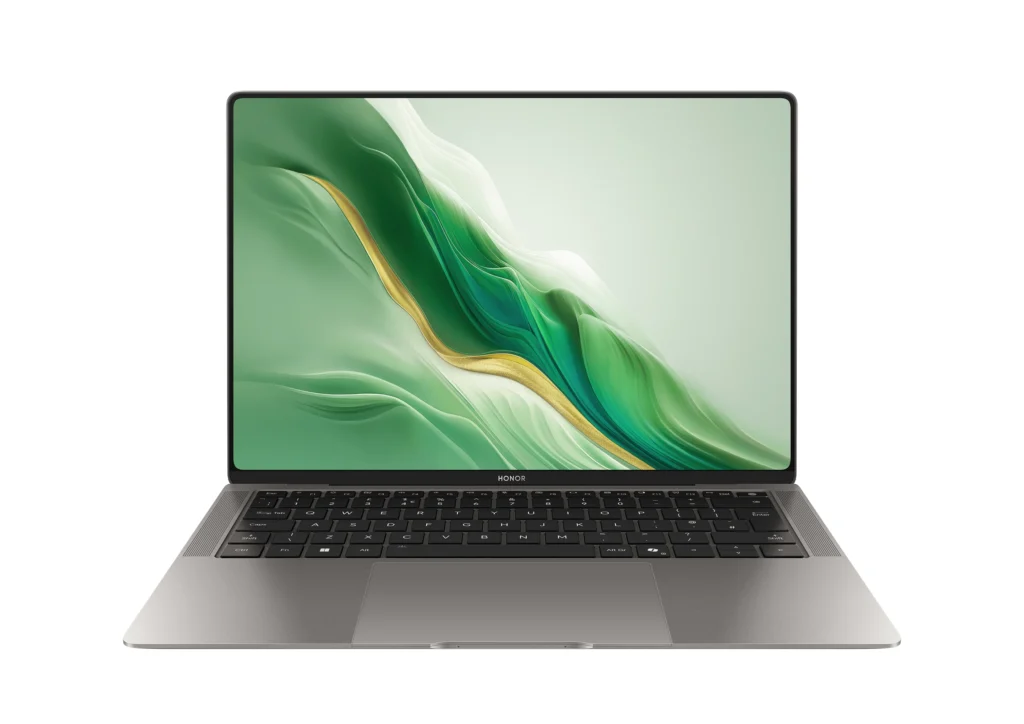
One recurring theme is that the M5 generation is not expected to bring a radical redesign — at least not yet.
- Chassis / body: Likely to retain the same overall form factor as current M4 MacBook Pros.
- OLED & redesign: The big changes (OLED displays, thinner chassis, hole-punch cameras, etc.) are often tied to the M6 generation or a later redesign.
- Touch / touchscreen: There are rumors that Apple may finally bring touch support to the MacBook line in a future model (possibly M6), using “on-cell” touch display tech.
- Camera / notch: Minor tweaks are expected — perhaps small changes to the camera unit or color variations. But a complete removal of the notch probably awaits a later redesign.
Ports, Connectivity & Other Features
- Thunderbolt / USB: The M4 Pro / Max already support Thunderbolt 5 on higher-end models; the M5 line may continue or refine this support.
- Memory / RAM / Bandwidth: Likely improvements in memory bandwidth, possibly larger base RAM configurations, and better memory architecture to complement the new chip. (Leaked details are scarce here.)
- Battery / Efficiency: The shift to more efficient silicon should yield improved battery life under similar workloads.
- 5G / Cellular? Some rumors speculation about embedding cellular connectivity (especially with 5G) into future Macs. But it’s more often tied to even later generations rather than M5.
- AI / Neural Engine & ML features: As machine learning features become more central, Apple is likely to beef up the Neural Engine / AI processing on M5 to better support on-device AI workloads (e.g. generative tasks, on-device inference). Some leaks already hint at AI-focused upgrades.
Why Might You Wait — vs Why Buy Now
If you’re eyeing a MacBook, here’s a quick call-to-action style balance:
Pros of Waiting for M5
- Performance uplift: You may get noticeably better CPU/GPU and efficiency.
- Longer “freshness” window: Buying the newest model gives you more runway.
- Better future resale: Newer chips tend to hold value.
- Potential for new features: Even small upgrades (memory, connectivity) matter.
Risks or Downsides

- Delay uncertainty: Apple might slip launch dates — if you need a laptop now, waiting is a gamble.
- Less dramatic upgrade: If the M5 refresh is only a modest bump (per many rumors), the benefit over existing M4 models might not justify waiting.
- Opportunity cost: You might skip productivity or creative time if you postpone.
- Better wait for M6? Some rumors suggest the “big leap” may come with M6 / OLED versions later in 2026, meaning the M5 could be a “middle” generation.
In short: if you don’t urgently need a new MacBook and can afford to wait, it’s reasonable to hold off until early 2026. But don’t tether yourself to rumors — if M4 (or current models) already serve you well, that’s still solid tech.